


 by The Computing Australia Group |
 Simple Steps to Connect Gmail with Outlook
Email is one of the most important tools in any business. Whether you are managing customer enquiries, supplier communication, internal updates, invoices, bookings, or project information, having your email available in one reliable place makes the working day easier.
Many people use Gmail for personal or business email, but prefer Microsoft Outlook as their main email application. Outlook is popular because it brings email, calendar, contacts, tasks, and Microsoft 365 tools together in one place. For businesses that already use Outlook every day, adding Gmail to Outlook can save time and reduce the need to switch between apps.
In this 5 Minute Help Desk guide, we explain how to set up Gmail in Microsoft Outlook, what to do if Outlook asks for extra security verification, and how to fix the most common setup issues.
Whether you are adding your first Gmail account or connecting an additional Gmail account to Outlook, the process is usually straightforward. However, because Google and Microsoft both use modern security systems, the exact steps can vary depending on your Outlook version, Gmail security settings, and whether 2-Step Verification is enabled on your Google Account.
This guide is written for everyday users and small businesses that want a simple, practical way to access Gmail through Outlook.
Why Add Gmail to Microsoft Outlook?
Gmail works well in a browser, but there are several reasons why you may prefer to manage it through Outlook.
Outlook allows you to view multiple email accounts in one place. This is useful if you have a Gmail account, a Microsoft 365 business email account, and perhaps another mailbox for shared enquiries. Instead of checking each account separately, Outlook lets you manage your messages from one application.
Outlook is also useful for users who rely heavily on calendar management. If your workday is built around meetings, reminders, and scheduled tasks, having your email and calendar together can improve productivity. You can quickly turn emails into calendar events, create tasks, flag follow-ups, and organise messages into folders.
For business users, Outlook also offers familiar tools for searching, sorting, archiving, and managing large volumes of email. If you spend a lot of time working in Microsoft Word, Excel, Teams, or OneDrive, Outlook may feel like a more natural place to manage your daily communication.
Adding Gmail to Outlook does not remove your Gmail account or stop you from using Gmail in your browser. It simply gives you another way to access the same mailbox.
Before You Start: What You Need
- Your full Gmail address
- Your Google Account password
- Access to your mobile phone or recovery method if 2-Step Verification is enabled
- Microsoft Outlook installed on your computer
- A working internet connection
- Permission to make changes to your account settings
If you are using a business-managed Google Workspace account, your organisation may have extra security rules. In that case, you may need help from your IT provider or Google Workspace administrator.
You should also make sure Outlook is updated. Older versions of Outlook may not support modern sign-in methods as smoothly as current Microsoft 365 versions. If Outlook is out of date, Gmail setup may fail or repeatedly ask for a password.
New Outlook vs Classic Outlook
Microsoft now has different Outlook experiences, including the newer Outlook for Windows and the traditional desktop version often referred to as classic Outlook.
The steps are similar, but the menus may look different.
In new Outlook, you usually add accounts from the settings area. In classic Outlook, you usually begin from the File menu and select Add Account.
If your screen does not look exactly like the screenshots or steps in a guide, do not worry. Microsoft changes the Outlook interface from time to time, but the overall process remains the same: add the account, enter your Gmail address, sign in with Google, allow permissions, and complete setup.
Method 1: Add Gmail to Outlook Using Sign in With Google
This is the recommended method for most users. It uses Google’s secure sign-in process and avoids the need to manually enter server settings.
Step 1: Open Microsoft Outlook
Open Outlook on your computer.
If you are using classic Outlook, select File from the top-left menu.
If you are using new Outlook, open Settings and go to the accounts section.
Step 2: Select Add Account
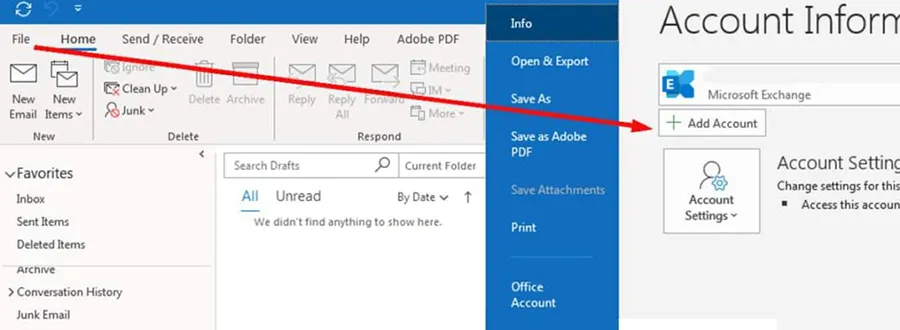
Choose Add Account.
Outlook will ask you to enter the email address you want to add.
Step 3: Enter Your Gmail Address
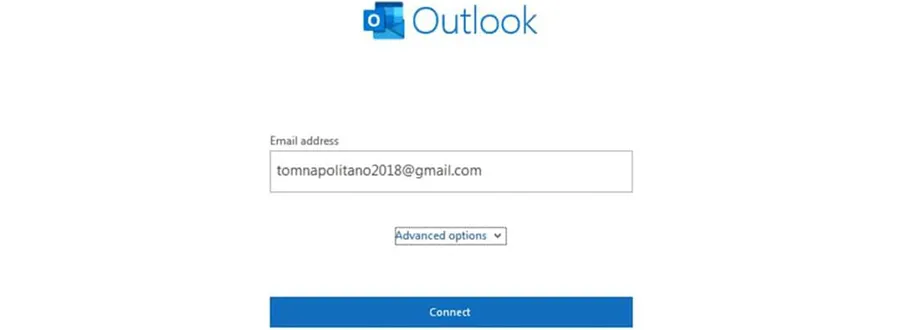
Type your full Gmail address, such as:
yourname@gmail.com
Then select Connect or Continue, depending on your Outlook version.
Sign in to Your Google Account
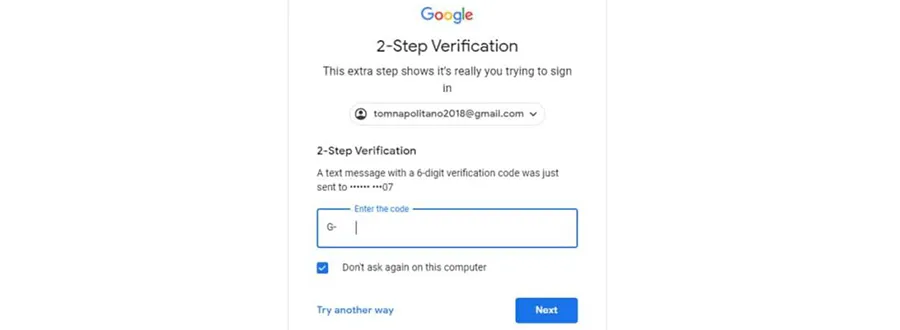
A Google sign-in window should appear.
Enter your Gmail password and follow the prompts.
If 2-Step Verification is enabled, Google may ask you to confirm your identity using your phone, Google prompt, authenticator app, text message, or another verification method.

Step 5: Allow Outlook to Access Gmail
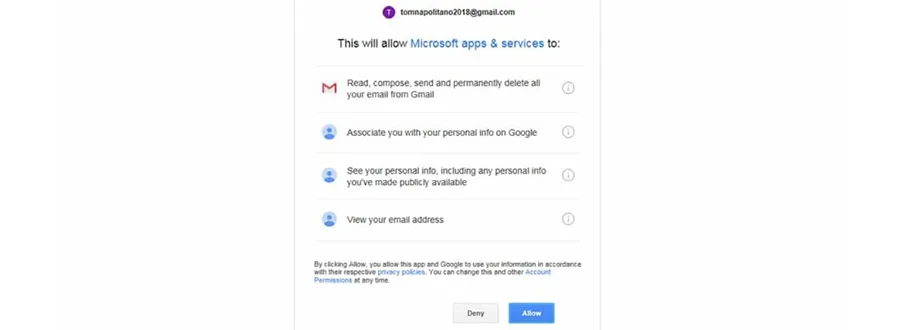
Google will show a permissions screen explaining what Microsoft Outlook wants to access.
Review the permissions and select Allow.
This step is important because Outlook needs permission to sync your Gmail messages with the Outlook app.
Step 6: Finish Setup
After permission is granted, Outlook will complete the connection.
You should see a confirmation message. Select Done or close the settings window.
Your Gmail account should now appear in the Outlook folder pane. Depending on the size of your mailbox, it may take some time for all emails and folders to sync.
Method 2: Add Gmail to Classic Outlook With an App Password
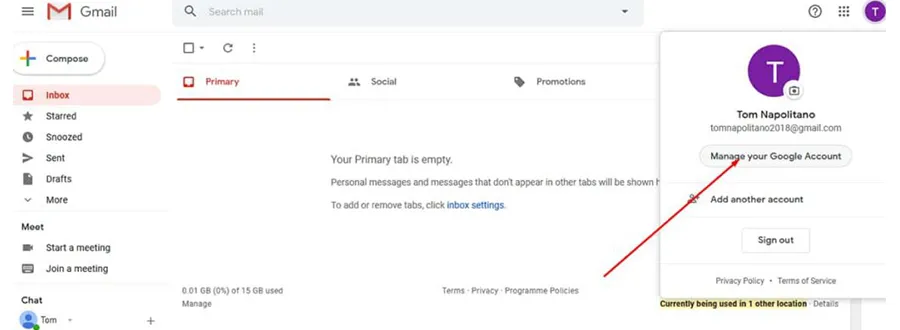
In most cases, the standard Google sign-in method is best. However, some older Outlook versions, older devices, or specific account configurations may require an app password.
An app password is not your normal Gmail password. It is a special 16-character password generated by Google for apps or devices that cannot use the standard Google sign-in process.
Only use an app password if Outlook cannot connect using the normal sign-in method or if your setup specifically requires it.
Step 1: Turn On 2-Step Verification
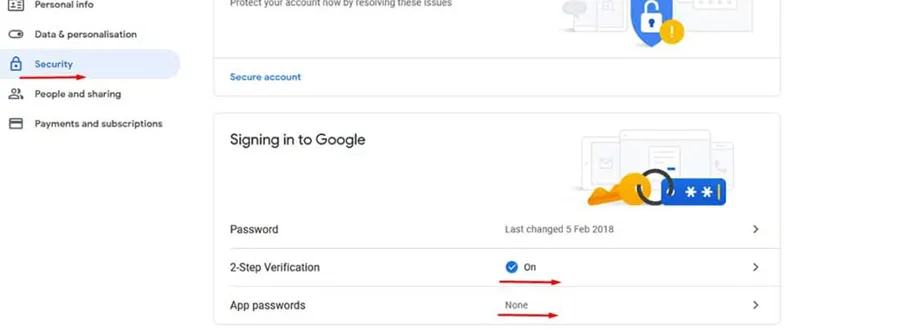
To create an app password, 2-Step Verification must be enabled on your Google Account.
Go to your Google Account security settings and find 2-Step Verification.
Follow the prompts to turn it on. You may need your mobile phone or another verification method.
Step 2: Generate an App Password
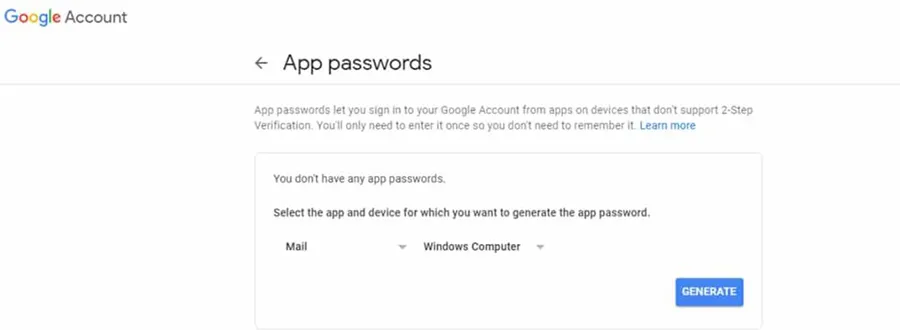
Once 2-Step Verification is enabled, go to the app passwords section of your Google Account.
Choose Mail as the app and select your device type, such as Windows computer.
Google will generate a 16-character app password.
Step 3: Copy the App Password
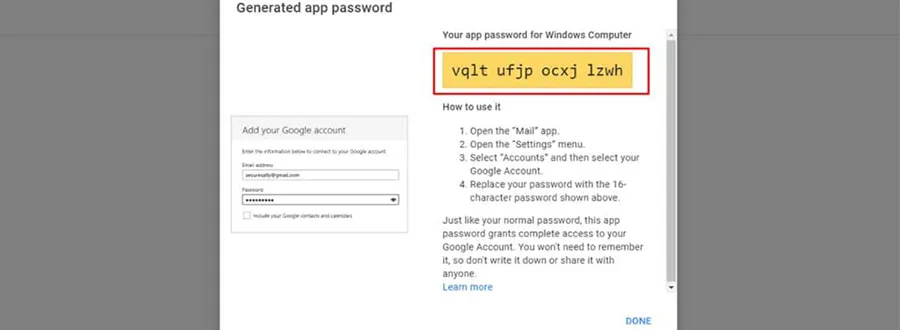
Copy the app password exactly as shown.
You do not need to include spaces when entering it into Outlook.
Step 4: Add Gmail in Outlook
Open Outlook and select File > Add Account.
Enter your Gmail address and continue.
When Outlook asks for a password, enter the app password instead of your normal Google Account password.
Step 5: Complete Setup
Follow the prompts and allow Outlook to finish adding the account.
Once the account is added, your Gmail messages should begin syncing.
Do You Need to Enable IMAP?
Gmail uses IMAP to sync email between Gmail and email clients such as Outlook.
IMAP allows your email to stay in sync across devices. For example, if you read, delete, or archive a message in Outlook, that change can also appear in Gmail.
In many modern setups, Gmail and Outlook handle this automatically when you connect the account through the normal sign-in process. However, if setup fails or you are configuring the account manually, you may need to check that IMAP is enabled in Gmail.
To check IMAP settings:
1. Open Gmail in your web browser.
2. Select the gear icon.
3. Choose See all settings.
4. Go to Forwarding and POP/IMAP.
5. Under IMAP access, make sure IMAP is enabled.
6. Save changes.
For most users, IMAP is the preferred option. POP is older and downloads messages differently, which can cause confusion if you access email from multiple devices.
Manual Gmail Server Settings for Outlook
Most users should not need to enter server settings manually. However, they can be useful when troubleshooting older versions of Outlook or advanced configurations.
Use the following settings for Gmail IMAP:
Incoming Mail Server
Server: imap.gmail.com
Port: 993
Encryption: SSL/TLS
Outgoing Mail Server
Server: smtp.gmail.com
Port: 465 with SSL/TLS or 587 with STARTTLS
Authentication: Required
Username: Your full Gmail address
Password: Your Google password or app password, depending on your setup
If you are unsure which settings apply to your account, contact your IT support provider before making changes. Incorrect server settings can prevent Outlook from sending or receiving mail.
What Happens After Gmail Is Added to Outlook?
After setup is complete, Outlook will begin syncing your Gmail mailbox.
You may see folders such as Inbox, Sent Mail, Drafts, Spam, Trash, and All Mail. Gmail labels may also appear as folders in Outlook. This can feel different from the Gmail web interface because Gmail uses labels, while Outlook traditionally uses folders.
Large Gmail mailboxes can take time to fully sync. During the first sync, Outlook may appear slow or incomplete. This is normal. Keep Outlook open and connected to the internet while the initial sync finishes.
You can continue using Gmail in your browser even after adding it to Outlook. Both access points connect to the same mailbox.
Common Gmail and Outlook Setup Problems
Although the setup process is usually simple, a few common issues can prevent Gmail from working properly in Outlook.
Outlook Keeps Asking for a Password
This usually happens when Outlook cannot complete the secure sign-in process or when the wrong password type is being used.
Try these fixes:
- Make sure your Gmail password is correct.
- Use the Google sign-in window if it appears.
- If using an older Outlook version, create and use an app password.
- Check that 2-Step Verification is enabled if an app password is required.
- Update Outlook to the latest version.
- Remove the account and add it again.
Gmail Does Not Appear in Outlook
If setup completes but Gmail does not appear, restart Outlook.
You should also check the left folder pane. Sometimes the new account appears lower in the account list.
If the account still does not show, go back to account settings and confirm whether Outlook saved the account.
Emails Are Not Syncing
If emails are not syncing, check your internet connection first.
Then check whether IMAP is enabled in Gmail. You should also allow time for the first sync to complete, especially if the mailbox contains years of email.
If only some folders are missing, Outlook may still be syncing, or the folder display settings may need adjustment.
Sent Emails Are Missing
Gmail and Outlook may display sent mail differently because Gmail uses labels. Check both the Outlook Sent folder and the Gmail Sent Mail label.
If sent messages are not appearing anywhere, check your outgoing SMTP settings or remove and re-add the account.
Outlook Is Running Slowly After Adding Gmail
Large Gmail mailboxes can slow Outlook during the first sync. This is especially common if your Gmail account contains many years of messages or large attachments.
Allow the sync to finish before making changes. You can also reduce the amount of mail Outlook downloads by adjusting sync settings, depending on your Outlook version.
Google Blocks the Sign-In Attempt
Google may block a sign-in if it looks unusual or insecure.
This can happen if you are using an outdated Outlook version, connecting from a new location, or trying to use a password-based setup instead of modern authentication.
Use the standard Google sign-in method where possible. If you are using an older version of Outlook, consider updating Outlook or using an app password if appropriate.
Security Tips When Using Gmail in Outlook
Adding Gmail to Outlook is convenient, but it is important to keep security in mind.
First, use a strong Google Account password. Avoid reusing passwords across multiple accounts. If one account is compromised, reused passwords can put other accounts at risk.
Second, enable 2-Step Verification. This adds another layer of protection by requiring a second form of verification when signing in. Even if someone knows your password, they may not be able to access your account without the second step.
Third, avoid using app passwords unless necessary. App passwords are useful for older apps, but modern sign-in methods are generally preferred because they provide better control and visibility.
Fourth, review connected apps in your Google Account from time to time. If you no longer use Outlook on a particular device, remove its access.
Finally, keep Outlook, Windows, and your antivirus software updated. Updates often include important security patches and compatibility improvements.
Gmail in Outlook for Business Users
For small businesses, using Gmail in Outlook can be a practical option, especially when staff are already comfortable with Microsoft Office.
However, business email setups can become complicated when multiple accounts, shared mailboxes, compliance requirements, and device policies are involved.
If your business uses Google Workspace, your administrator may control whether users can connect Gmail to third-party email clients. They may also enforce 2-Step Verification, restrict IMAP access, or require specific security policies.
If your business uses Microsoft 365 as well, it may be worth reviewing whether Gmail should remain the primary email platform or whether a migration to Microsoft 365 email would be more efficient. This depends on your workflow, budget, security requirements, and staff preferences.
A managed IT provider can help you choose the best setup, reduce sync problems, and make sure staff email accounts are configured securely.
Should You Use Gmail in Outlook or the Gmail Web App?
There is no single right answer. It depends on how you work.
Outlook is a good choice if you manage several mailboxes, use Microsoft 365 daily, prefer a desktop email client, or rely on Outlook calendar and task tools.
The Gmail web app is a good choice if you prefer Google’s interface, use Google Drive and Google Calendar heavily, or want the simplest Gmail experience without additional software.
Some users use both. For example, they may use Outlook at work and Gmail in the browser when travelling or using another device.
The key is to choose the setup that helps you work efficiently without creating unnecessary confusion.
Quick Setup Checklist
1. Update Outlook.
2. Open Outlook account settings.
3. Select Add Account.
4. Enter your Gmail address.
5. Sign in using Google.
6. Complete 2-Step Verification if prompted.
7. Allow Outlook access to Gmail.
8. Wait for Gmail to sync.
9. Check that Inbox, Sent Mail, and folders appear correctly.
10. Send a test email to confirm everything works.
If Outlook does not accept your password, check whether your version requires an app password.
When to Contact IT Support
- Outlook repeatedly rejects your Gmail password.
- Gmail sync stops working after setup.
- Your business Google Workspace account blocks Outlook access.
- You are unsure whether to use IMAP, POP, or Microsoft 365.
- You need to migrate Gmail data to Microsoft 365.
- You are setting up Gmail for several staff members.
- You are concerned about account security.
- You need help with 2-Step Verification or app passwords.
Email setup issues can be frustrating, especially when they interrupt your workday. A professional IT support team can identify whether the problem is with Outlook, Gmail, account security, device settings, or business policies.
Need help setting up Gmail, Outlook, Microsoft 365, or Google Workspace?
Contact Computing Australia today for reliable business IT support.

Gordon Murdoch
FAQ
Can I use Gmail in Microsoft Outlook?
Why does Outlook keep asking for my Gmail password?
This may happen if Outlook cannot complete Google’s secure sign-in process, your password is incorrect, 2-Step Verification is enabled, or your Outlook version requires an app password.
Do I need an app password for Gmail in Outlook?
Most modern Outlook versions use Google sign-in and do not need an app password. Some older versions or specific setups may require one.


