


 by The Computing Australia Group |
 Share Your Outlook
Calendar Easily
A busy workday can quickly become difficult to manage when meetings, phone calls, deadlines, client appointments and internal catch-ups all compete for space in your calendar. A well-managed calendar helps you stay organised, but a shared calendar can do even more. It allows your team to check availability, plan meetings faster, avoid double-booking and reduce the back-and-forth emails that often happen when everyone is trying to find a suitable time.
Microsoft Outlook Calendar is widely used by businesses because it connects email, meetings, reminders, contacts and scheduling in one familiar platform. Outlook mobile makes this even more convenient by allowing users to manage their calendar from an iPhone or Android device. Whether you are working from the office, travelling between appointments or checking your schedule from home, Outlook mobile gives you access to your day wherever you are.
Sharing your Outlook calendar is especially useful in a business environment. Team members can see when you are free, managers can coordinate meetings more efficiently, and support staff can help manage appointments when required. Microsoft confirms that Outlook mobile allows users to share work or personal calendars so others can view or edit events, depending on the permissions granted.
In this guide from our IT HelpDesk team, we explain what Outlook calendar sharing is, why it matters, what permission levels mean, and how to share your Outlook mobile calendar step by step.
What Is Outlook Calendar Sharing?
Outlook calendar sharing is a feature that allows you to give another person access to your calendar. Depending on the permission level you choose, that person may only be able to see when you are busy, view more detailed appointment information, edit events, or act as a delegate.
This is different from simply sending someone a meeting invitation. A meeting invitation gives access to one event. Calendar sharing gives ongoing visibility into your calendar, based on the permissions you select.
For example, you might share your calendar with:
- A colleague who needs to check your availability before booking meetings.
- A manager who wants visibility of team schedules.
- A receptionist or assistant who helps organise appointments.
- A project team that needs to coordinate deadlines and meetings.
- A business partner who regularly schedules calls with you.
When used correctly, shared calendars improve communication, reduce scheduling mistakes and make daily operations smoother.
Why Share Your Outlook Calendar?
Sharing your Outlook calendar can save time and make workplace coordination much easier. Instead of asking, “Are you free at 2 pm?” or sending several emails to compare availability, your colleagues can quickly check your calendar and choose a suitable time.
Here are the main benefits.
1. Avoid Schedule Clashes
Calendar sharing reduces the need for repeated emails, phone calls or chat messages about availability. A colleague can simply check your calendar and send a meeting invite for a free time.
2. Save Time
When team members can see each other’s availability, it becomes easier to book meetings at suitable times. This reduces double-booking and helps avoid last-minute changes.
3. Improve Team Collaboration
Shared calendars are useful for departments, project teams and client-facing staff. They help everyone understand when people are available, busy, travelling or out of office.
4. Support Flexible and Remote Work
Many businesses now operate with hybrid or remote teams. A shared Outlook calendar helps people stay aligned, even when they are working from different locations.
5. Give Assistants or Delegates Access
If someone helps manage your diary, Outlook allows you to provide higher permission levels. This means they may be able to create, edit or manage calendar events on your behalf, depending on your organisation’s setup.
6. Control What Others Can See
You do not have to share every detail. Outlook allows different levels of visibility, so you can decide whether someone sees only your availability, titles and locations, or full appointment details.
Key Features of Outlook Mobile Calendar Sharing
Outlook mobile calendar sharing is designed to be simple and practical. While the exact screens may vary slightly depending on whether you use iOS or Android, the core features are similar.
Easy Calendar Sharing
You can share your calendar directly from the Outlook mobile app. This makes it convenient when you are away from your desk and need to give someone access quickly.
Permission Control
You can choose how much access another person receives. Some users may only need to view your availability, while others may need editing or delegate permissions.
Add or Remove Access
You can add people to your shared calendar and remove them later if needed. This is helpful when someone changes role, leaves a project or no longer needs access.
Side-by-Side Calendar Viewing
Outlook allows shared calendars to be viewed alongside your own calendar. This makes it easier to compare schedules and choose meeting times.
Flexible Detail Sharing
You can control whether another person sees limited information or full appointment details. This is useful when balancing collaboration with privacy.
Access Across Devices
Microsoft notes that users can accept shared calendar invitations from Outlook and view shared calendars across devices. This means a shared calendar is not limited to one device once it has been added correctly.
Understanding Outlook Calendar Permission Levels
Before sharing your Outlook calendar, it is important to understand permission levels. Choosing the wrong permission can either restrict someone too much or give them more access than they need.
The wording may vary depending on your Microsoft 365 setup, Outlook version and administrator settings, but the common permission types include the following.
Can View When I’m Busy
This is the most limited sharing option. The other person can see blocked time in your calendar, but they cannot see appointment names, meeting locations or details.
This is useful when someone only needs to know whether you are available.
Can View Titles and Locations
This option allows the person to see your availability, meeting titles and locations. However, they may not see full notes, meeting descriptions or private details.
This is suitable for colleagues who need more context but do not need complete access.
Can View All Details
This permission allows the person to see full calendar details, including event titles, locations and descriptions.
Use this only when the person genuinely needs detailed visibility into your schedule.
Can Edit
This allows the person to make changes to your calendar. They may be able to create, edit or delete events, depending on the account and organisation settings.
This permission is useful for assistants, administrators or trusted team members who help manage your diary.
Delegate
Before You Share Your Calendar
Before giving someone access to your Outlook calendar, take a moment to review what is already in it. Calendars often contain more information than we realise, including client names, internal meeting topics, personal appointments, travel plans and confidential project details.
Here are a few things to check first.
Review Private Appointments
If your calendar includes personal or sensitive appointments, mark them as private where appropriate. This can help protect details while still showing that you are unavailable.
Choose the Minimum Access Needed
Not everyone needs full details or edit access. For most colleagues, “Can view when I’m busy” or “Can view titles and locations” may be enough.
Check Company Policies
Some organisations have rules about calendar sharing, delegate access and external sharing. If you are unsure, check with your IT administrator or HelpDesk.
Confirm the Correct Email Address
Make sure you share your calendar with the right person. This is especially important when people have similar names or multiple email addresses.
Use Business Accounts Where Possible
For workplace calendar sharing, use official business email addresses. This helps keep access controlled within your organisation.
How to Share Your Outlook Calendar from the Mobile App
The steps below explain the general process for sharing your Outlook calendar from the Outlook mobile app. The layout may vary slightly depending on your device, app version and organisation settings.
Step 1: Open the Outlook Mobile App
Open the Microsoft Outlook app on your iPhone or Android phone.
Make sure you are signed in to the correct account. If you use Outlook for both personal and work email, check that you are sharing the correct work calendar.
Step 2: Go to Calendar View
Tap the Calendar icon at the bottom of the Outlook mobile app.
This switches the app from your email inbox to your calendar.

Step 3: Open the Calendar Menu
Tap the menu icon, usually shown as three horizontal lines, near the top left of the screen.
This opens your list of calendars and accounts.

Step 4: Open Calendar Settings
Find the calendar you want to share. Tap the settings icon next to that calendar.
This opens the calendar settings page, where you can manage colour, sharing and other calendar options.
Step 5: Select “Add People”
Look for the option to add people or manage sharing.
Tap Add People.
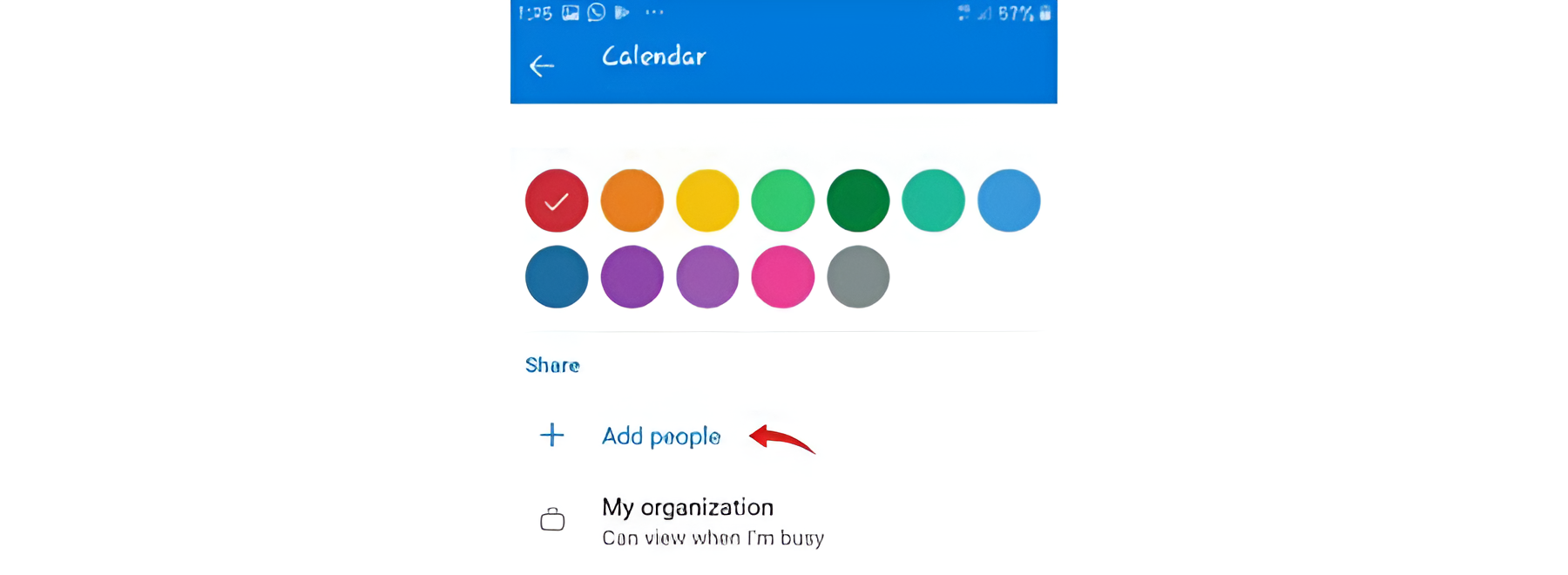


Step 6: Enter the Person’s Name or Email Address
Type the name or email address of the person you want to share your calendar with.
If the person is in your organisation, Outlook may suggest their contact details automatically. Select the correct person from the list.
Step 7: Choose the Permission Level
After selecting the person, choose the level of access you want to give.
For example, you may be able to choose whether the person can:
- View only when you are busy.
- View titles and locations.
- View all details.
- Edit your calendar.
- Act as a delegate.


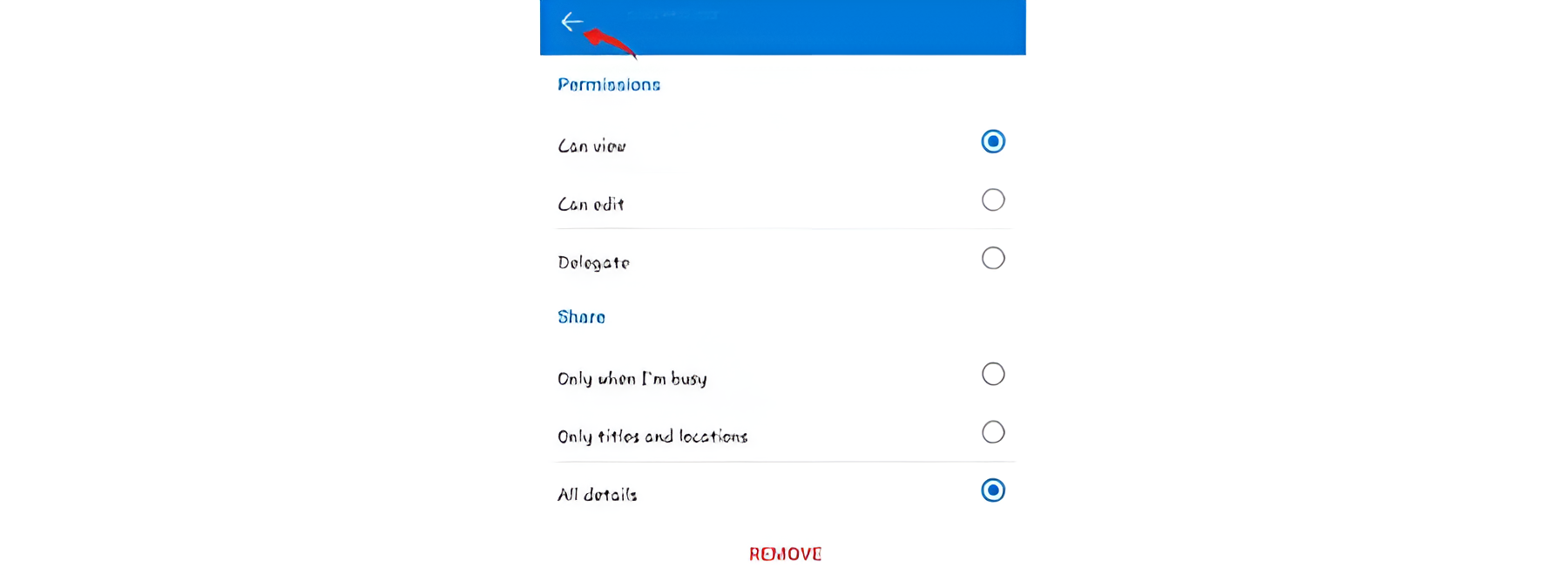
Choose the permission that matches the person’s role and need.
Step 8: Confirm the Sharing
Once you have selected the person and permission level, confirm the action by tapping the tick, checkmark or save option.
Your calendar is now shared with that person.


How to Change Calendar Sharing Permissions
You may need to change calendar permissions later. For example, a colleague may need more access for a temporary project, or someone may no longer need to view your calendar.
To change permissions in Outlook mobile:
1.Open the Outlook mobile app.
2. Go to the Calendar section.
3. Open the calendar menu.
4. Tap the settings icon next to the calendar.
5. Select the person whose access you want to change.
6. Choose a new permission level.
7. Save the changes.
This allows you to increase, reduce or adjust access without resharing the calendar from the beginning.
How to Remove Someone’s Calendar Access
You should review shared calendar access regularly, especially when employees change roles, projects end or external contractors finish working with your business.
1. Open Outlook mobile.
2. Go to Calendar.
3. Open the calendar settings.
4. Find the person who currently has access.
5. Select their name.
6. Choose the option to remove access or stop sharing.
7. Confirm the change.
You should review shared calendar access regularly, especially when employees change roles, projects end or external contractors finish working with your business.
How to View Someone Else’s Shared Calendar
If another person has shared their calendar with you, you may be able to add it to your Outlook mobile view.
In many cases, you will receive a sharing invitation. Once you accept it, the shared calendar should appear in Outlook. Microsoft states that shared calendar invitations can be accepted from Outlook and viewed across devices.
To view a shared calendar in Outlook mobile:
1. Open the Outlook mobile app.
2. Go to Calendar.
3. Open the calendar menu.
4. Look for the shared calendar under your account or shared calendars.
5. Tick or enable the calendar so it appears in your view.
You can then compare your calendar with the other person’s calendar to find suitable meeting times.
Common Outlook Calendar Sharing Problems
Sometimes calendar sharing does not work as expected. Here are some common issues and what you can do.
The Sharing Option Is Missing
If you cannot see the option to share your calendar, your organisation may have disabled calendar sharing or limited the feature through Microsoft 365 settings.
Contact your IT administrator or HelpDesk for support.
The Person Cannot See Your Calendar
Ask the person to check whether they accepted the sharing invitation. They may also need to refresh Outlook or add the shared calendar manually.
Permissions Are Not Working Correctly
If someone cannot edit your calendar even though you gave them edit access, the issue may be related to account type, organisation policy or sync delays.
Try removing and re-adding the permission. If that does not work, contact IT support.
Calendar Changes Are Not Syncing
Calendar sync problems can happen if the app is outdated, the internet connection is unstable, or the account needs to be reauthenticated.
Try these fixes:
- Check your internet connection.
- Restart the Outlook app.
- Update Outlook mobile.
- Sign out and sign back in.
- Remove and re-add the account if advised by IT.
The Wrong Calendar Was Shared
Many users have multiple calendars, such as personal, work, project or holiday calendars. If the wrong calendar was shared, remove access immediately and share the correct one.
Quick Troubleshooting Checklist
If Outlook calendar sharing is not working, check the following:
- Are you signed in to the correct Outlook account?
- Are you sharing the correct calendar?
- Did you enter the correct email address?
- Did the other person accept the sharing invitation?
- Is the Outlook mobile app updated?
- Does your organisation allow calendar sharing?
- Are you connected to the internet?
- Have you selected the correct permission level?
- Has the calendar had time to sync?
- Do you need help from your IT administrator?
If the issue continues, contact your IT support team for assistance.
Need help with sharing outlook mobile calendar or other outlook queries? Our IT helpdesk in Perth is 24/7 ready to support you. Contact us or email at helpdesk@computingaustralia.group for any assistance with your IT queries.
Jargon Buster
Outlook – A personal information manager from Microsoft. Majorly used as an email client.
iOS– Mobile operating system developed by Apple Inc. for its mobile devices.

Gordon Murdoch
FAQ
How do I share my Outlook calendar on mobile?
Open the Outlook mobile app, go to Calendar, open your calendar settings, tap Add People, enter the person’s email address, choose their permission level and save the changes.
Can someone edit my Outlook calendar?
Yes, but only if you give them edit or delegate permissions. If you only want them to view your availability, choose a lower permission level.
Can I stop sharing my Outlook calendar later?
Yes. You can go back to your calendar settings, select the person who has access and remove or change their permission.
Why can’t I share my Outlook calendar?
Your organisation may have restricted calendar sharing, or you may be using an account type that does not support the feature. Contact your IT administrator or HelpDesk for support.
Is it safe to share my Outlook calendar?
Yes, if you choose the right permission level. Share only the details needed, mark sensitive appointments as private and regularly review who has access.


